Roof Moisture Survey
Roof moisture survey reports (see figure
6) are made by capturing IR and visual images and making scaled
drawings of the wet areas, so that surgical repairs can be
accomplished. Almost all roof insulation materials discarded in the US
annually are dry. Why throw away 95% of the insulation when it is not
damaged? With a thermal map of a group of buildings one can narrow
down the roofs that have problems from the ones that do not…on a
wholesale basis. This allows facilities management to concentrate on
those roofs that need to be repaired, while keeping a trend-quality
image of the good roofs.
Subsurface wet areas in a flat or low-sloped roof show up as lighter
areas in the IR imagery at night because the latent heat (from daytime
heating) in the trapped water mass is greater than in the dry,
functioning insulation or roof substrate. Areas of roof moisture
contamination can be nebulous in shape and sometimes mottled in
appearance, although they are commonly found in linear
or puddle-like shapes. The linear shapes many times follow low areas,
drainage routes, roof edges and seams. Puddle-like round or oblong
shapes often form around roof penetrations such as mechanical
equipment, standpipes, vents and drains. After sunset when the entire
roof structure cools down, wet areas of roof insulation and other
materials continue to radiate heat because of their
higher mass.
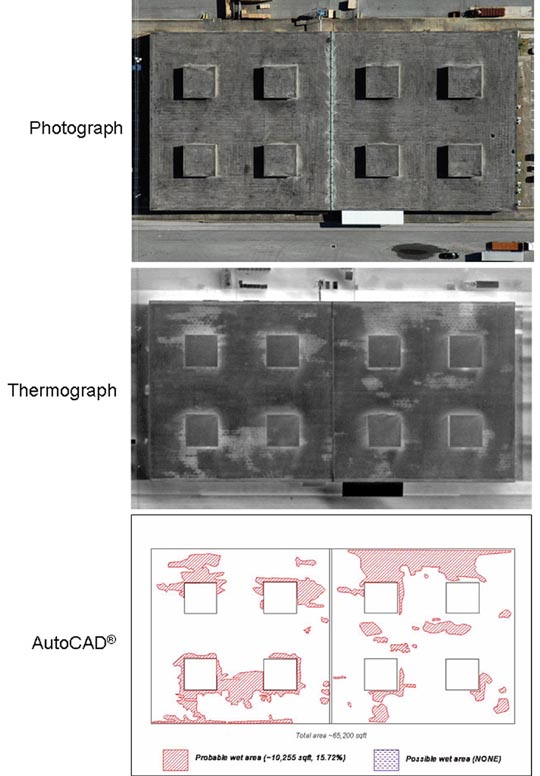
Figure 6, 7, 8) Photograph, thermograph and CAD drawing of a
flat roof with moisture contamination.
Advantages of Aerial IR Imaging of Roofs
-
High-angle, straight-down infrared images capture large areas at
once, making the imagery easier to analyze and the report clear and
concise. Because infrared images, visual images and AutoCAD®
drawings are reconciled, it is less expensive to produce detailed
reports.
-
Plan view imaging allows for accurate marking of areas of suspect
roof moisture contamination. AutoCAD® drawings are made by drawing
‘over’ the captured visual and infrared image on the screen.
-
Logistical, image quality, access and security problems, which are
common when performing on-roof IR surveys, are eliminated. The
printed AutoCAD® drawings can be used on the roof to paint areas of
moisture contamination directly on the roof, if desired. There is
never a time when on-roof IR produces better results than aerial IR.
-
With the roofs surveyed and existing CAD drawings corrected,
updated, saved and layered into a GIS or CAD system, the facilities
operator takes control of all the roofs. Knowing the condition of
all the roofs allows for better life-cycle preventive maintenance,
warranty enforcement, budget planning and improved roof asset
management.
|